
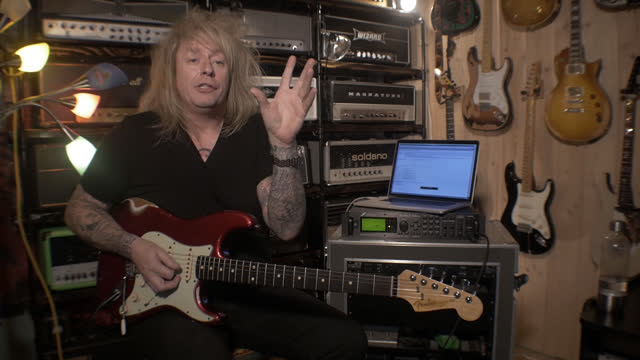
Melodic Phrasing
Gilby Clarke shares insight from his time with Guns N Roses and covers what he considers to be a lost art form...Rock Rhythm playing
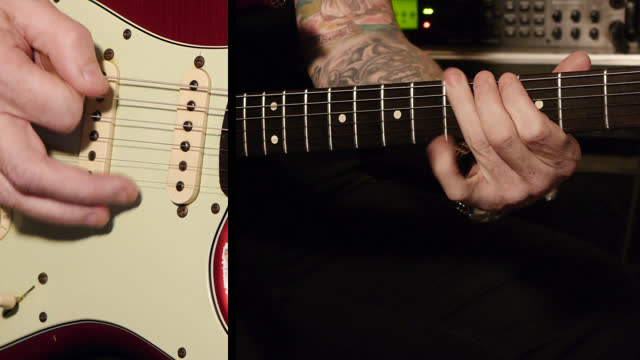
Re-visualizing Scales " Blues Scale and Pentatonic"
In this lesson Finbar shows you how to add chromaticism to basic blues and Pentatonic scales to break " Out of the Box"
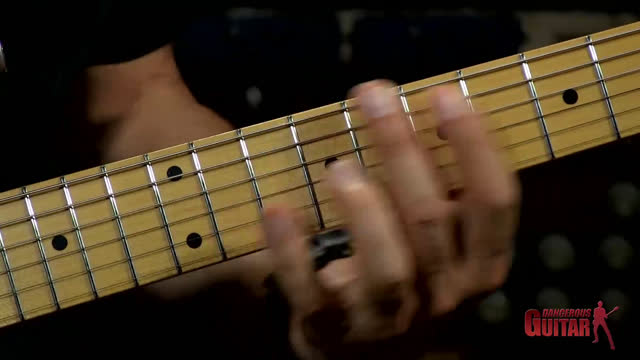
2. Jazz Soloing with Octaves
Learn a style of jazz soloing that's been around for decades. Octaves are key in this one and Stuart shows you the proper way to pull of this technique. He also demonstrates how it might be used.
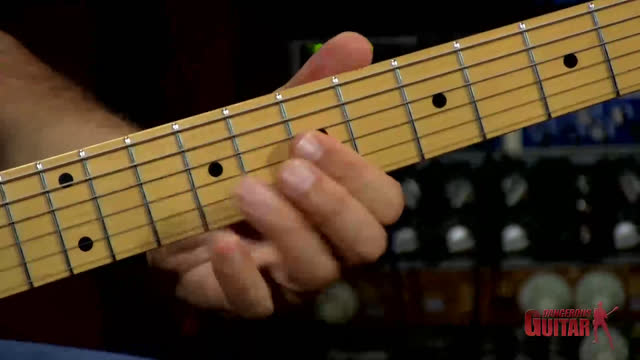
1. Blues Solo Over Jazz Riff
Stuart Ziff shows you some great blues lick ideas to go over the popular 2-5-1 Jazz turnaround. This is the first video in the Jazz in Blues Series.
Writing That Riff
What's a riff? What makes a good riff? Prashant shows you.
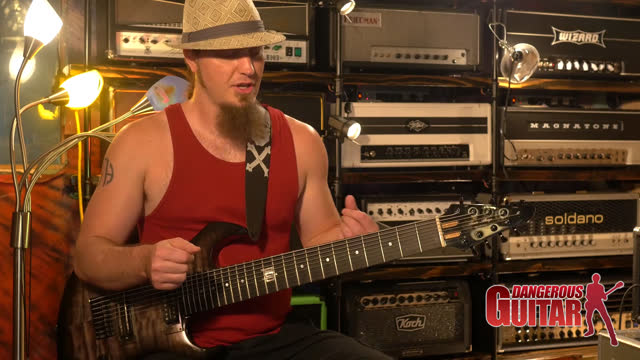
Prog Metal Odd Time Signatures 7/8 - 9 String Guitar
Greg takes you into some odd time signatures used in PROG METAL. This lesson is played on a 9 string guitar but you can still grasp an understanding of the 7/8 time signature information if you are using just a 6 , 7 or 8 string guitar
5-String Bass
In this lesson we discuss the mechanics of the 5 string bass and the general approach on how to incorporate it into your familiar bass lines.
Bass Basics Major Pentatonic Scale
Learn to play a Major Pentatonic scale. A wide range of players from Kirk Hammet to Jimmy Page use this scale, and it's considered a staple in every beginners bag of tricks. This is also the first scale, along with the minor pentatonic scale, that many people use when beginning to improvise.
Bass Basics Applying Minor Scales
Learn how to create a bass line using the minor scale.
5. Combining Solo Techniques
Stuart Ziff shows you some great examples of the tecnhiques already taught in this series. He'll superimpose chords, show you the blues pentatonic over a Jazz 2-5-1 and more.
4. Adding Double Stops
What's a double-stop? Stuart shows you and gives great examples of how they're used in jazz and blues.
3. Superimposing Jazz Chords
Stuart Ziff shows you how to superimpose one chord over another.